フォルクスワーゲン主導の研究チームが、初めてバッテリーの複数回リサイクルに着手
・共同研究チームは、ドイツ連邦経済・気候保護省の支援を受け、クローズドループ原材料プロジェクトを開始
・持続可能性を高め、素材の安定供給を確保するために、貴重な原材料の恒久的な回収の実現を目指す
ウォルフスブルグ、2022年6月8日 - 産業界および科学界のパートナーは、駆動用バッテリーの最も貴重なコンポーネントを、リサイクルを通じて複数回連続して回収・再利用できることを共同で証明したいと考えています。「HVBatCycle」共同研究チームは、クローズド マテリアル サイクル(クローズドループ)により、陰極金属、電解質、グラファイトを恒久的に利用することを目標に掲げています。フォルクスワーゲングループ主導の下、TANIOBIS GmbH*、J. Schmalz GmbH、Viscom AGの各企業が、アーヘン工科大学、ブラウンシュヴァイク工科大学、フラウンホーファーIST(Fraunhofer Institute for Surface Engineering and Thin Films)の研究者と協力し、必要なプロセスの研究と開発を3年間にわたって行います。このプロジェクトには、ドイツ連邦経済・気候保護省から資金が提供されています。
* JX金属のグループ会社
政務官、ミヒャエル ケルナー:「ヨーロッパにおけるバッテリー生産は、可能な限り多くの分野で持続可能性に焦点を当ることによってのみ、成功させることができるでしょう。持続可能なバッテリーは、高い環境および社会基準に従ったエネルギーおよびモビリティ転換にとって不可欠な要素です。」
フォルクスワーゲンAGバッテリーセル担当最高執行責任者(COO)のセバスティアン ウォルフは、次のように説明しています。「バッテリーのリサイクルと再利用は、現在計画されている工場に安定的に原材料を供給する上で、決定的に重要な役割を果たします。リサイクルプロセスを総体的な視点から捉えた“HVBatCycle”プロジェクトを通じて、私たちはバッテリー原材料のクローズドループを実現するための準備を整えています。」
クローズド原材料サイクルと複数回のリサイクル
鉱山や塩原といった一次採掘場から得られた原材料の使用量を削減するためには、主要な原材料を1回だけなく、複数回リサイクルする必要があります。そのためには、リサイクルされた原材料から作られたバッテリーセルを再びリサイクルして、複数回リサイクルを行った場合でも原材料の品質に影響がないことを証明しなければなりません。このようなクローズドループを実現するには、複数の分野にまたがる複雑なプロセスが必要です。効率的で環境に優しく、採算の取れる方法でリサイクルを行い、最高に安全な要件の下で、素材別に分類された高品質な二次材料を得るためには、すべてのプロセスを互いに調整する必要があります。ここで重要なのは、スケーラビリティと経済的効率です。
分散化による独立したプロセス、二次材料の使用による利点
この共同プロジェクトは、エネルギー使用量が低く、ヨーロッパにおいて、特定のリサイクルプロセスの比較的シンプルな分散配分が可能な機械式/湿式製錬によるリサイクル手法に焦点を当てています。この方法により、地域の循環型経済を促進し、戦略的に重要な原材料を確保し、これらの原材料における世界の他の地域に対するヨーロッパの依存度を大幅に低下させることができます。「HVBatCycle」プロジェクトは、高い経済効率を備えた完全なバリューチェーンを確立するための効率的なプロセスと革新的なソリューションを特定すると同時に、リサイクルおよびエネルギー効率を最大化し、環境への影響を最小化することを目指しています。
解体プロセスおよび電極材回収の自動化
革新的な開発アプローチを実現する鍵は、需要指向、つまり経済的に最適化できるかどうかにあります。リサイクルするバッテリーシステムの放電と解体は、セルまたは電極レベルに至るまで、高度に自動化する必要があります。これには、活物質とキャリア箔をほぼ損失のない状態で分離することに加え、グラファイトや揮発性電解質成分を回収することも含まれています。
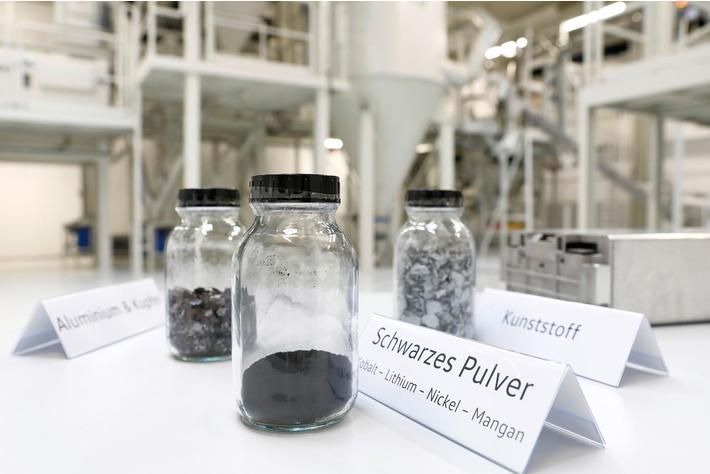
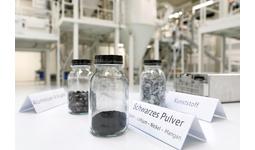
グラファイトおよびバッテリー金属を包含する「黒い塊(black mass)」と呼ばれる物質を処理する次の湿式製錬では、水および化学溶剤を使用して金属成分をとかし、その溶液から早期かつ選択的にリチウムを採取し、そこに含まれている金属成分を、混合水酸化物濃縮物として浸出、沈殿、精製する方法に焦点が当てられています。このプロセスでは、陰極活物質の再生材料合成に関連して、新しい完全に高性能なカソード材料を製造するために、金属化合物の分離が本当に必要かどうかが調査されます。
電解質とグラファイトの処理に関する研究では、適切なプロセスの開発を通じて、重要な電解質成分とグラファイトが効率的に処理され、バッテリーセルの生産に適した品質で再利用できることを示すことを意図しています。すべてのプロセス段階では、環境への影響および経済的なライフサイクルに対する総体的な 分析が行われます。
About the cooperation partners:
As part of its battery strategy and its sustainability strategy, Volkswagen AG is very interested in the realisation of a closed loop of cell materials and has therefore taken on the coordination and management of the project. With the pilot plant for mechanical recycling at the Salzgitter components site, the Group’s Technology division ensures the production and supply of recyclable material from vehicle batteries. In addition, the cell manufacturing expertise of the Centre of Excellence in Salzgitter is used to produce new cells from fully recycled material.
TANIOBIS GmbH is a quality supplier of powders containing niobium and tantalum for hydrometallurgical manufacturing processes including solvent extraction. As a subsidiary of JX Nippon Mining & Metals, it has in-depth knowledge of hydrometallurgical recycling of lithium-ion batteries, which will be used in the project. Based on this, TANIOBIS GmbH will build and operate the required hydrometallurgical and pyrometallurgical infrastructure at the Chemiepark Oker site, where a certified analytical laboratory is also available.
J. Schmalz GmbH is the world’s leading supplier of vacuum technology and one of the few full-range suppliers in this field. In the vacuum automation business segment, Schmalz supplies all the vacuum components needed to assemble grippers for industrial robots. In addition, sensor technology from Schmalz ensures process efficiency and safety. In joint projects with scientific institutes, handling systems for silicon wafers and cathode and anode foils were established.
Viscom AG develops X-ray measurement solutions specifically for use in the battery cell industry. The product portfolio ranges from laboratory systems to complete inline solutions for 100% quality control at high speeds. Viscom specialises in a variety of different cell formats, such as pouch or prismatic cells, covering different sizes for consumer products through energy storage to e-mobility cells.
The Battery LabFactory Braunschweig (BLB), as an established transdisciplinary research centre of the TU Braunschweig, is one of the leading institutions in the field of battery research in Germany. The BLB is an R & D platform for circular production, diagnostics and modelling/simulation of batteries of the current and future generations. In its pilot plant, the BLB combines engineering process know-how, materials science expertise, battery cell system knowledge from the natural sciences and sound analytical skills.
The Institute of Machine Tools and Production Technology (IWF) focuses on technological and automation issues along current and future manufacturing process chains for battery cells.
The elenia Institute for High Voltage Technology and Power Systems has extensive experience in the field of formation, cyclic ageing and the electrical and electrochemical characterisation of battery cells.
At the Institute for Particle Technology (iPAT), mechanical and particle technology processes for the production of battery materials and electrodes as well as mechanical and thermal processes for battery recycling are investigated.
The Institute of Chemical and Thermal Process Engineering (ICTV) has broad expertise in the separation of fluid mixtures.
The Institute of Energy and Process Systems Engineering (InES) has many years of experience in the modelling and simulation of batteries as well as electrochemical analysis and operando analytics.
The Fraunhofer Institute for Surface Engineering and Thin Films (IST) conducts intensive research and development in the areas of material synthesis and functionalisation, surface treatment and
modification, film production and application, film characterisation and surface analysis, as well as in the field of production technology. As a central topic at the Fraunhofer Project Center for Energy Storage and Management Systems (ZESS), battery research focuses on material and energy storage development, including associated process and manufacturing technologies as well as the holistic and sustainable design of the life cycle.
The Institute for Metallurgical Process Engineering and Metal Recycling (IME) at RWTH Aachen University has many years of experience in application-oriented research into battery recycling processes. The research focus here is on recovering the valuable metals contained in batteries using thermal and hydrometallurgical processes. The institute has a comprehensive infrastructure for testing various recycling concepts, which also includes an innovative pyrolysis furnace from Otto Junker GmbH for processing larger quantities or entire battery modules. Through its in-house certified laboratory, the IME has access to many important analytical methods that are needed in the investigation of possible battery recycling processes.
企業プレスリリース詳細へ
プレスリリース提供:PR TIMES

愛車の売却を、もっと楽に!もっと高く!
-
一括査定はたくさんの買取店からの電話が面倒?
これまでの一括査定は、たくさんの買取店からの電話が面倒でした。MOTA車買取なら、最大20社の査定額をwebで簡単比較。やり取りするのは査定額上位の3社だけ。車の査定が楽に完結する仕組みです。
-
一括査定は本当に高く売れるの?
これまでは、買取店に会わないと査定額がわからず、比較がしづらい仕組みでした。MOTA車買取は最短3時間後、最大20社を簡単比較。加えて、買取店は査定額上位3社に選ばれるために競い合うから、どうしても高く売れてしまいます。
検索ワード


MOTA編集部は自動車に関する豊富な知識を持つ専門家チーム。ユーザーにとって価値のあるコンテンツ・サービスを提供することをモットーに、新型車の情報や、自動車の購入・売買のノウハウなど、自動車に関する情報を誰にでも分かりやすく解説できるように監修しています。